
3 hr
Intimate Whale Watching Experience from Mooloolaba
Small-group humpback whale cruise with unobstructed viewing on a 22-passenger vessel
Reserve
Five tour options departing The Wharf, humpback season runs June through November
Hand-picked by our editors — only the best 5 experiences from 12 reviewed.
Verified partners for every tour, free cancellation where available, and instant confirmation on every booking.
3 hr
Small-group humpback whale cruise with unobstructed viewing on a 22-passenger vessel
Reserve
3 hr
Three-hour ocean cruise tracking migrating humpbacks along the Sunshine Coast with onboard bar
Reserve
2 hr
Two-hour marine adventure aboard a fast open vessel to observe humpback whales in their natural habitat
ReservePrices from verified partners. Availability updates in real time at checkout. Free cancellation policies apply where shown.
The landmarks, rooms, and views travelers on this tour remember — all visible on a single visit.
This spacious 20-meter catamaran features multiple viewing decks including an open-air upper level. It offers 360-degree views of the surrounding ocean during the migration cruise.
The vessel is equipped with an underwater microphone that transmits the vocalizations of humpback whales. Guests can listen to the male whales singing their complex underwater songs.
Located at the bow of the vessel, this open deck provides the closest vantage point to the water. It is the premier spot for capturing photos of whale breaches.
A sheltered indoor seating area featuring large glass viewing windows and air conditioning. It contains the licensed kiosk serving hot beverages and light snacks.
A specialized boarding platform at the stern of the vessel designed for the swim-with-whales experience. It allows snorkelers to safely enter and exit the water.
While Hervey Bay offers calmer waters, booking a mooloolaba whale watching tickets tour is much closer to Brisbane. This Sunshine Coast whale watching cruise is ideal for visitors short on time.
| Feature | Top pick Mooloolaba | Hervey Bay |
|---|---|---|
Departure Point |
The Wharf Mooloolaba | Great Sandy Straits Marina |
Standard Adult Price |
$89 AUD | $130–$155 AUD |
Average Cruise Duration |
2 to 3.5 hours | 3 to 4 hours |
Water Conditions |
Open ocean (often choppy) | Sheltered bay (typically calm) |
Primary Whale Behavior |
Migrating and traveling actively | Resting and nursing calves |
Swim with Whales Option |
✓ | — |
Distance from Brisbane |
1.25 hours drive | 3.5 hours drive |
Best Arrival Window |
08:00–10:00 | 07:00–08:30 |
| See tickets → |
Verdict: Go to Hervey Bay for a dedicated humpback eco-tour, or check out mooloolaba whale watching tickets tours to buy your mooloolaba whale watching tickets tickets for a convenient day trip.
Choose your ticket, select your date, and reserve in under two minutes. Secure checkout handled by our verified partner.
Instant confirmation by email, with a mobile voucher you can save offline. No printing, no queuing at a collection desk.
Arrive at the entrance, show your voucher on your phone, and walk in. Most tickets include priority or skip-the-line access.
Best time to go, insider tips, nearby landmarks, and the cancellation fine print — flip through to skim what matters to you.
How crowds, weather, and events shift across the year.
This marks the start of the migration season when active humpbacks travel north toward warmer waters. Pods are energetic and frequently spotted close to the coast.
Known as the crossover period, this peak window features whales traveling both north and south. Sighting frequency is at its highest, with numerous active groups.
The southward journey brings mothers with young calves resting in the sheltered bays. The pace is slower, allowing for close and gentle encounters.
Morning cruises generally encounter calmer ocean swells and lighter winds. The early light is excellent for spotting distant whale blows against the horizon.
Small details that turn a good visit into a great one.
We advise booking your Mooloolaba whale watching tickets online in advance to secure your preferred departure time, especially during the August peak.
Even on calm days, the ocean swell can cause seasickness. Take preventative medication at least one hour before boarding the vessel.
Temperatures on the open water are cooler than on land. Bring a windproof jacket to stay comfortable during the cruise.
Tours are highly weather-dependent. Monitor your phone on the day of the trip for any schedule updates or weather delays.
Polarized lenses reduce glare on the water surface, making it much easier to spot the dark shapes of whales swimming below.
Secure your camera equipment with a strap. The boat can move suddenly when crossing ocean swells.
Non-bookable sights within a short walk — free to visit, easy to pair.
A scenic headland providing elevated views over the ocean. It is an excellent shore-based whale watching spot during the migration season.
A family-friendly beach protected by the headland, featuring a tree-lined foreshore and picnic areas.
An indoor aquarium located adjacent to The Wharf, featuring shark tunnels and seal presentations.
A coastal reserve offering walking trails, grassy areas, and panoramic views of the Sunshine Coast coastline.
Flexible, no hidden fees.
Cancellations must be made at least 48 hours prior to the scheduled departure to receive a full refund. No refunds are provided for late cancellations or no-shows when booking your Mooloolaba whale watching tickets.
Hand-picked options within walking distance — pick a district for vibe, or a specific hotel for convenience.
An upscale apartment resort located directly on the Esplanade, featuring private balconies overlooking the beach.
Comfortable self-contained apartments situated close to the marina and dining precinct.
A caravan park offering powered sites right next to the beach, perfect for families and budget travelers.
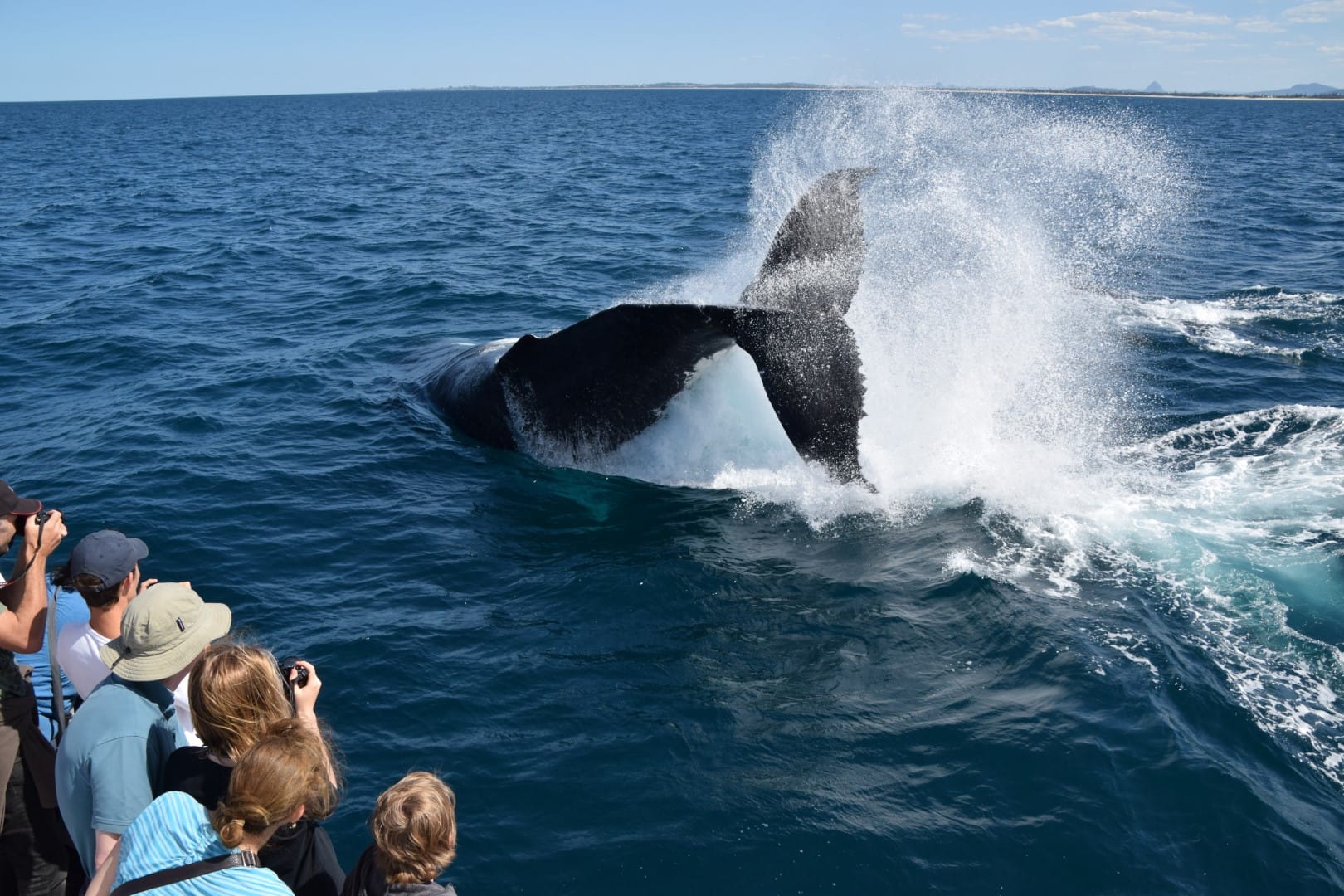
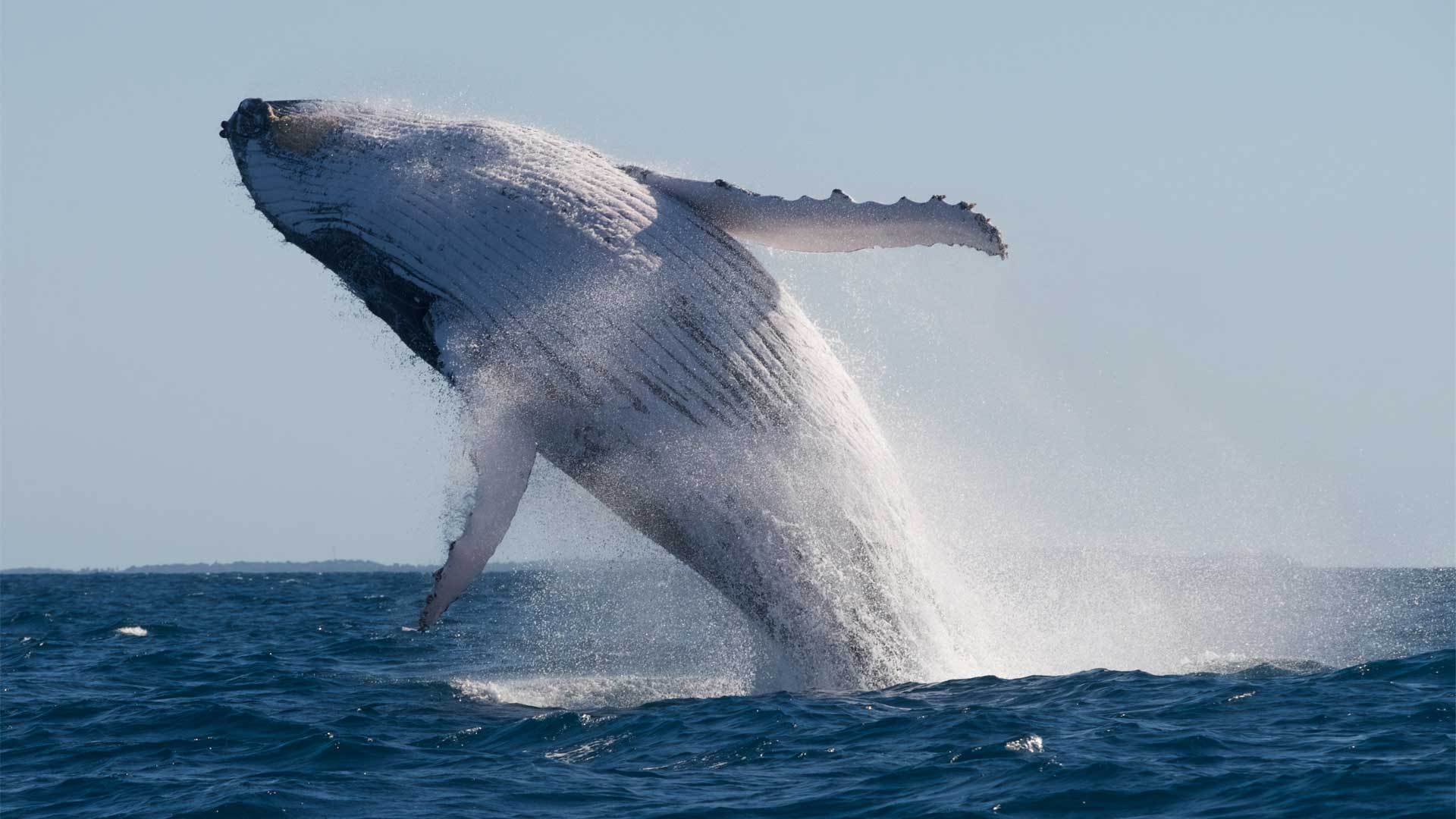
Each winter, more than 30,000 humpback whales travel northward along Queensland's coast, funneling through the narrow channel between Mooloolaba and Moreton Island in one of the Southern Hemisphere's most concentrated marine migrations. The Sunshine Coast's continental shelf drops away just twelve kilometres offshore, creating deep-water corridors that draw pods close enough to shore that breaching calves are visible from headland lookouts. Commercial whale watching from Mooloolaba began in 1987, when a single operator ran weekend charters; today, five dedicated vessels depart The Wharf between June and November, each fitted with hydrophones that broadcast the low-frequency songs males produce during courtship. Mooloolaba whale watching tickets cover a range of vessel types, from stable catamarans designed for families to jet-powered inflatables that close distance quickly when a pod surfaces. The migration splits into two phases: northbound whales pass Mooloolaba between June and August, travelling at a steady five knots toward calving grounds in the Coral Sea; southbound pods, now accompanied by newborn calves, return between September and November, lingering in sheltered bays to nurse and rest. Sighting rates exceed ninety percent during peak weeks in July and October, when multiple pods often occupy the same feeding zone. Operators report that curious juveniles approach vessels more frequently during the southern migration, circling hulls and spy-hopping within twenty metres of passengers. Vessels range from twelve-metre cats certified for fifty passengers to six-metre rigid inflatables limited to twelve, with tour durations spanning two to four hours depending on sea state and pod behaviour. Some operators offer swim encounters under permit, lowering snorkelers into the path of southbound pods when visibility tops fifteen metres and swell stays below one metre. Hydrophone recordings from the 2025 season captured song phrases lasting up to twenty minutes, with individual males repeating melodic sequences across multiple days. The Wharf operates daily from 8 a.m., with morning departures favoured for glassy conditions and raking light that makes blows visible at distance. Conservation levies fund University of Queensland research tracking individual whales through fluke photography, a catalogue now spanning four decades and more than eight thousand animals.
"Sighting rates exceed ninety percent during peak weeks in July and October, when multiple pods often occupy the same feeding zone."